Garage Doors · Ajax
Before you call
A garage door lives outdoors on one side and indoors on the other, so weather and seasons shape it more than people expect. Several of these notes are about exactly that.
Call now · open 24/7(289) 275-8485- Service bulletin 1Garage Door Remote and Keypad Programming: what to note firstYour remote was in the visor when the car was broken into last night. So was the insurance slip with your address on it.Read
- Service bulletin 2New-Construction Garage Door Installation: reading the quoteThe jambs, header, spring anchoring area and overhead attachment points used by the door system need to be complete, accessible and accepted by the responsible project party. Their locations depend on the selected track…Read
- Service bulletin 3Garage Door Roller Replacement: inside the visitRoller replacement changes the small wheels that guide each section of your garage door along its track. A four-section residential door usually has ten of them: one at each end of the three hinge lines, one in each top…Read
Curious about something?
Repair & Maintenance
Why does my door reverse on the way down for no reason?
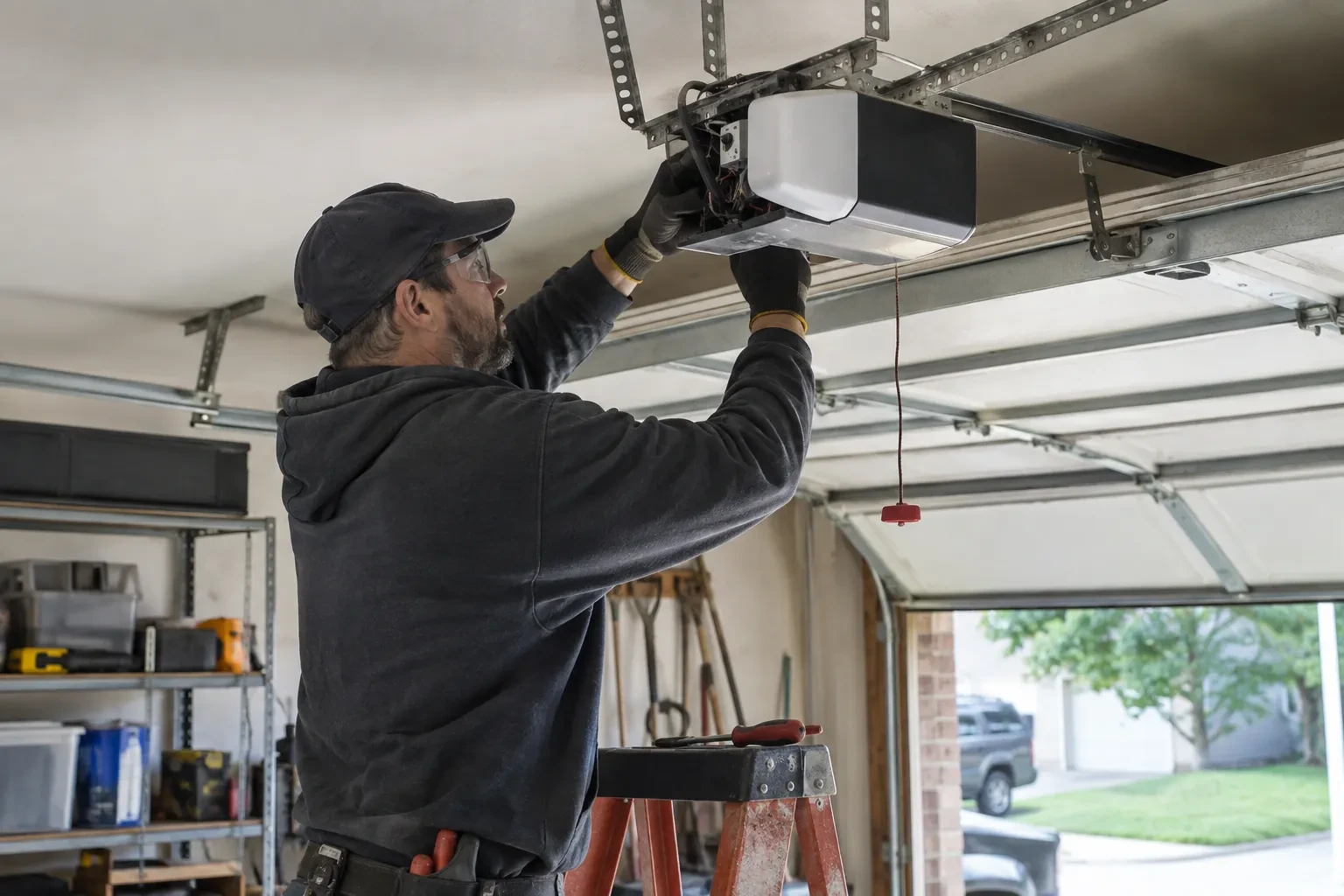
Most often it is the photo eyes. A sensor knocked slightly out of line, a lens with a film of road grime, a loose wire, or low afternoon sun shining straight into one eye will each break the beam as far as the opener is concerned. The next candidates are a down-force setting that has drifted, a binding roller or a door that has gone out of balance. The inspection checks each in turn. Garage Door Safety Inspection
How often should a garage door be tuned up?
Once a year suits most attached garages here, ideally in the fall before cold weather thickens lubricant and stiffens seals. Door and opener makers suggest lubrication every three to six months and a homeowner balance check and reversal test every month, so an annual professional visit sits on top of that light routine. A lightly used door in a detached garage may go longer; a heavily used one, or one exposed to salt spray, benefits from a spring check too. Garage Door Tune-Up
Can a door frozen to the floor really cause this?
Yes, and in winter it is one of the most common causes. Meltwater under the bottom seal refreezes overnight and bonds the door to the slab. The opener pulls, the door stays put, the cables go slack and unwind off their drums, and when the ice lets go the door lurches up unevenly. Freeing the seal by hand before using the opener on icy mornings prevents almost all of these calls. Off-Track Garage Door Reset
How do I know whether the damage is only cosmetic?
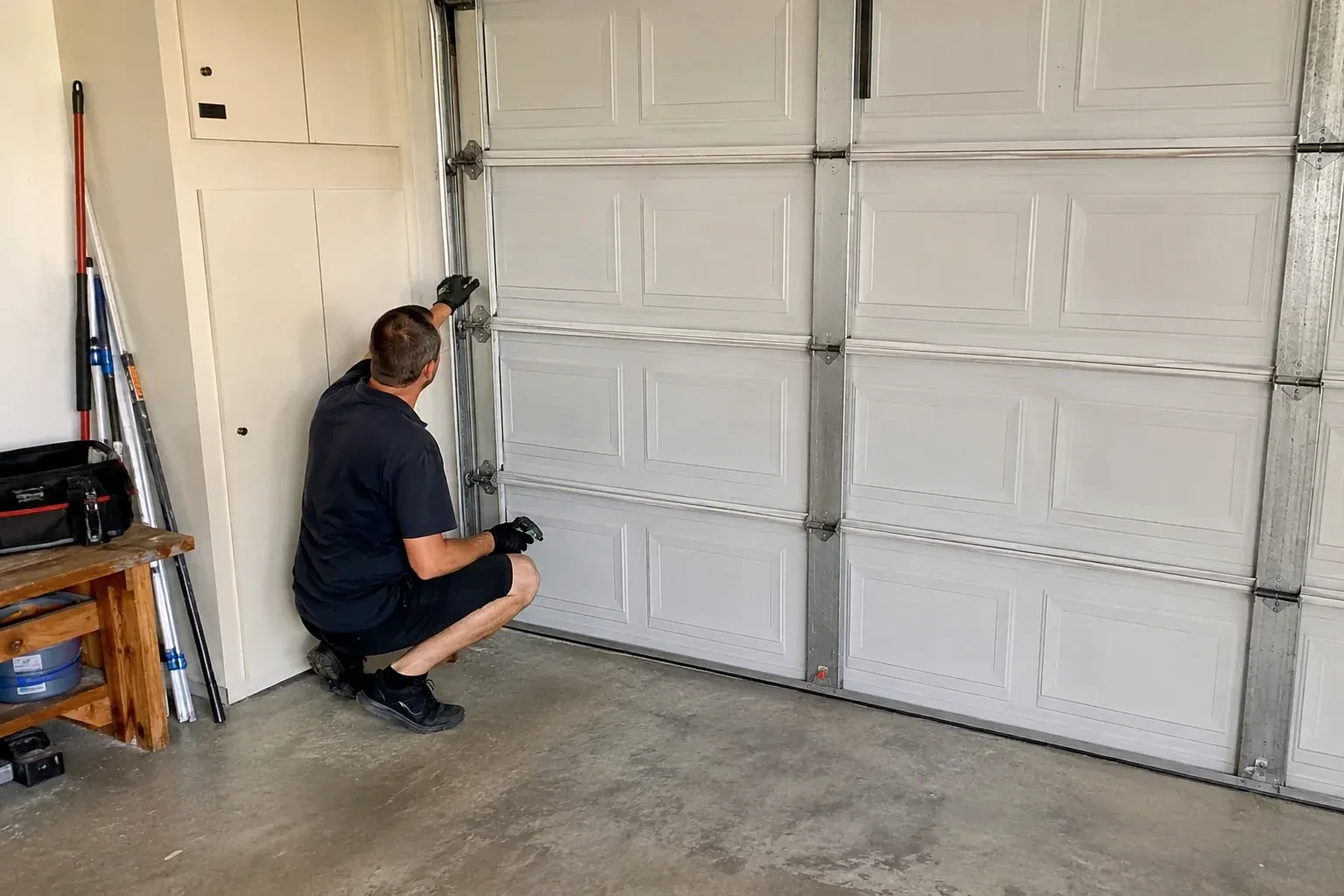
Watch the door move. A cosmetic dent leaves the section flat at the joints, the door travelling without a catch, and the hinges and rollers seated normally. Signs that the damage goes further include a crease that reaches a joint or stile, a hinge screw that has pulled out, a roller sitting crooked in the track, a gap of daylight at a joint, or a shudder as that section reaches the track curve. Any of those calls for a proper assessment. Garage Door Panel Replacement
Springs & Hardware
I lubricated everything and the grinding came back. Why?
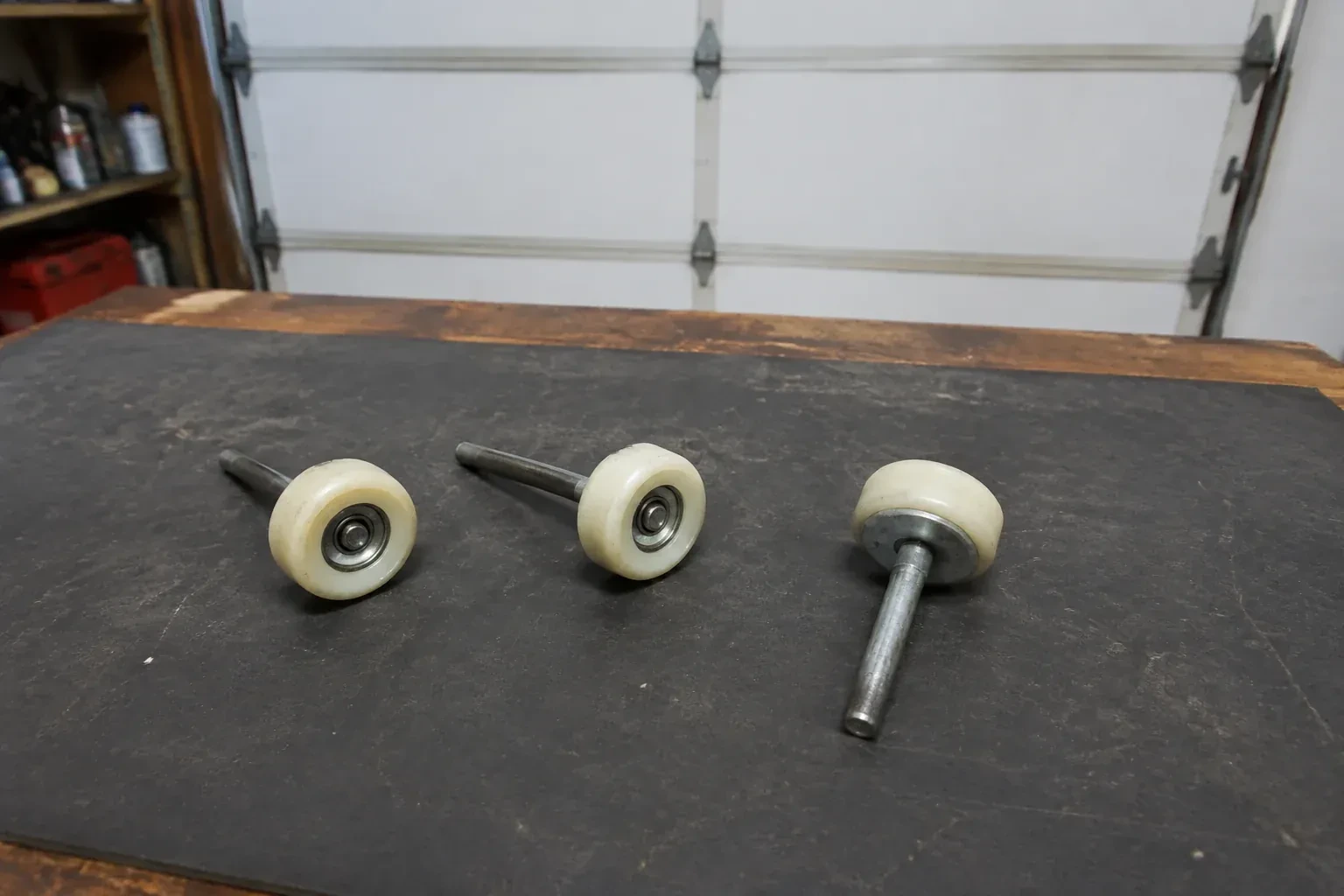
Lubricant restores bearings and hinges that are still sound; it has nothing to offer a wheel worn oval, a nylon tire that has cracked, or bearings whose balls have pitted their race. When a spray settles the noise for a day or two and it returns, the wear is in the roller itself and replacement is the answer. Spray on the track or a plastic wheel can make matters worse by collecting grit, so the technician cleans that off as part of the job. Garage Door Roller Replacement
Does hinge work affect the springs or the door's balance?
Hinge replacement leaves the springs untouched, since the door stays closed and the counterbalance is not unloaded. Balance is checked at the end all the same, because a door the opener has to drag is one of the main reasons hinges fail early. If the door drifts up or sinks when lifted by hand and released, the technician explains the spring adjustment needed and offers it as its own decision. Garage Door Hinge Replacement
Why is the horizontal track sagging?
The horizontal run hangs from the ceiling on back hangs of perforated angle, and it sags when a hanger bends, its screws pull out of a joist, or it was only ever fixed into drywall. A sagging hanger droops that run out of level or its intended pitch. The fix is a straight or new hanger screwed into solid framing, with the run set to the manufacturer's specified pitch and matched to its partner; a door that drifts back toward the opening once raised is a separate, balance-related symptom. Garage Door Track Repair or Replacement
What is the cable drum, and when does it need replacing too?
The drum is the grooved wheel on each end of the torsion shaft that the cable winds onto as the door opens. Its grooves guide the cable in a single layer and its shape sets how the door is balanced through its travel. A drum is replaced when the grooves are worn or cracked, the cable slot is damaged, or it has spun on the shaft and scored it. Drums are changed in pairs. Garage Door Cable Replacement
Openers & Access
Which parts most often need replacing on an opener?
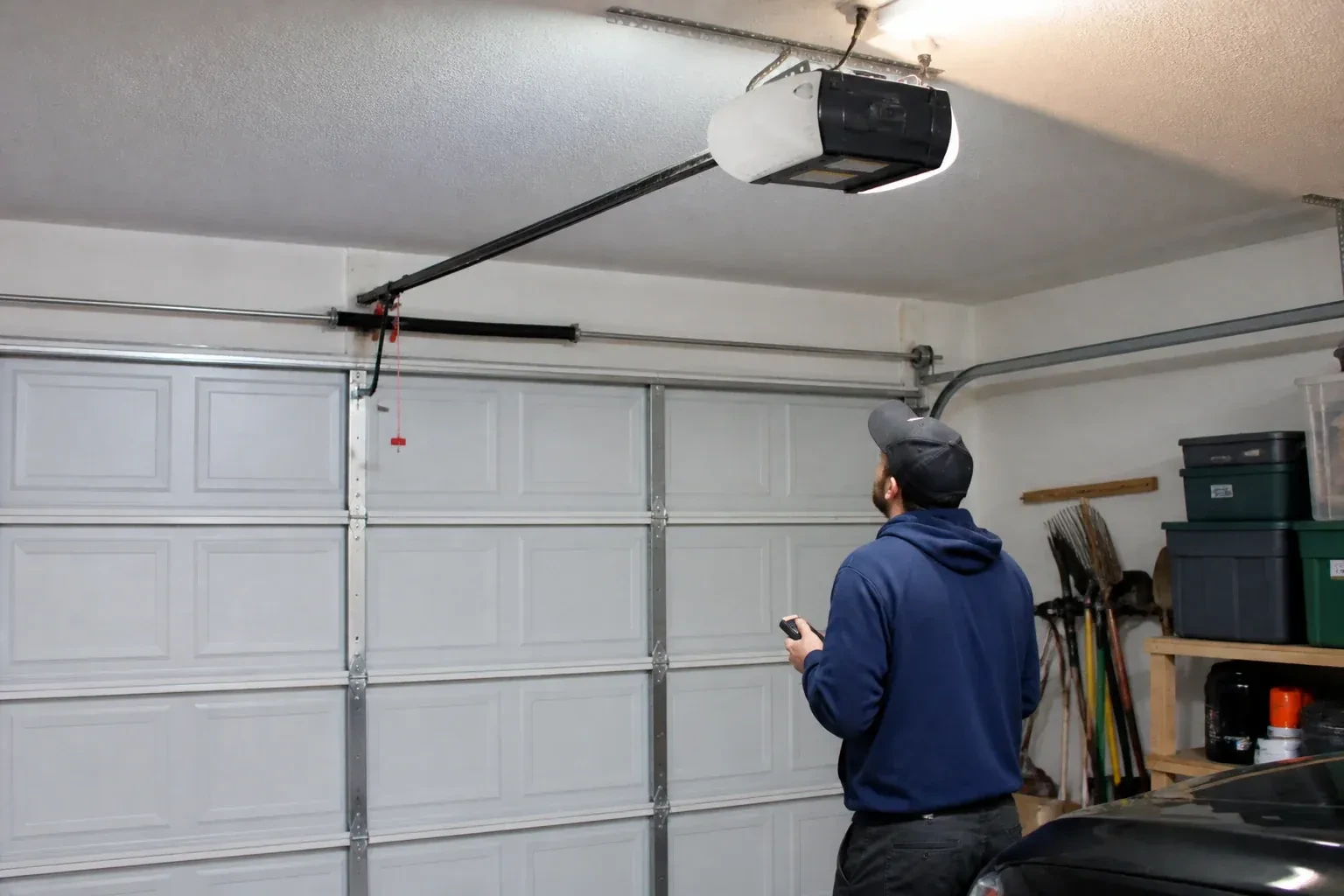
The list is short and familiar: the drive gear and sprocket on chain-drive units, the start capacitor on AC motors, the photo-eye pair and its wire, the trolley and carriage, the wall control, the remotes and their batteries, the light socket, and on newer units the battery backup pack. Logic boards and motors are replaced less often and weighed against the unit's age. Most of the common items are carried to the visit. Garage Door Opener Diagnosis and Repair
Is a chain drive supposed to be this noisy?
A chain drive has a steady mechanical sound that a belt drive lacks, and that much is normal. What is not normal is change: a slap along the rail from a loose chain, a clack at one spot from a worn sprocket tooth, grinding from the head as a gear wears, or a rattle from hangers or a header bracket that have loosened. Each of those has a fix, and a repaired chain drive should sound the way it did when it was new. Chain-Drive Opener Repair
Can I adjust the belt tension myself?
The adjustment nut is reachable and some owners do, but there are two things to get right. The operator must be unplugged and the door released first, and the spring must be set to the maker's length rather than tightened until the sag disappears, since an over-tight belt is noisy and hard on the motor. After any change, the reversal tests should be repeated. Many people prefer to have it done during a service. Belt-Drive Opener Repair
What is a wall-mount opener and who is it for?
It is the operator that lives on the wall rather than the ceiling. Fixed where the torsion shaft ends, it rotates the shaft to raise and lower the door, and nothing hangs overhead. It suits cathedral and low ceilings, garages with lofts or lifts, and anyone who wants a very quiet door. Because there is no trolley holding the door shut, it comes with a powered deadbolt on the track and a monitor that stops the door if a lift cable slackens. Garage Door Opener Replacement
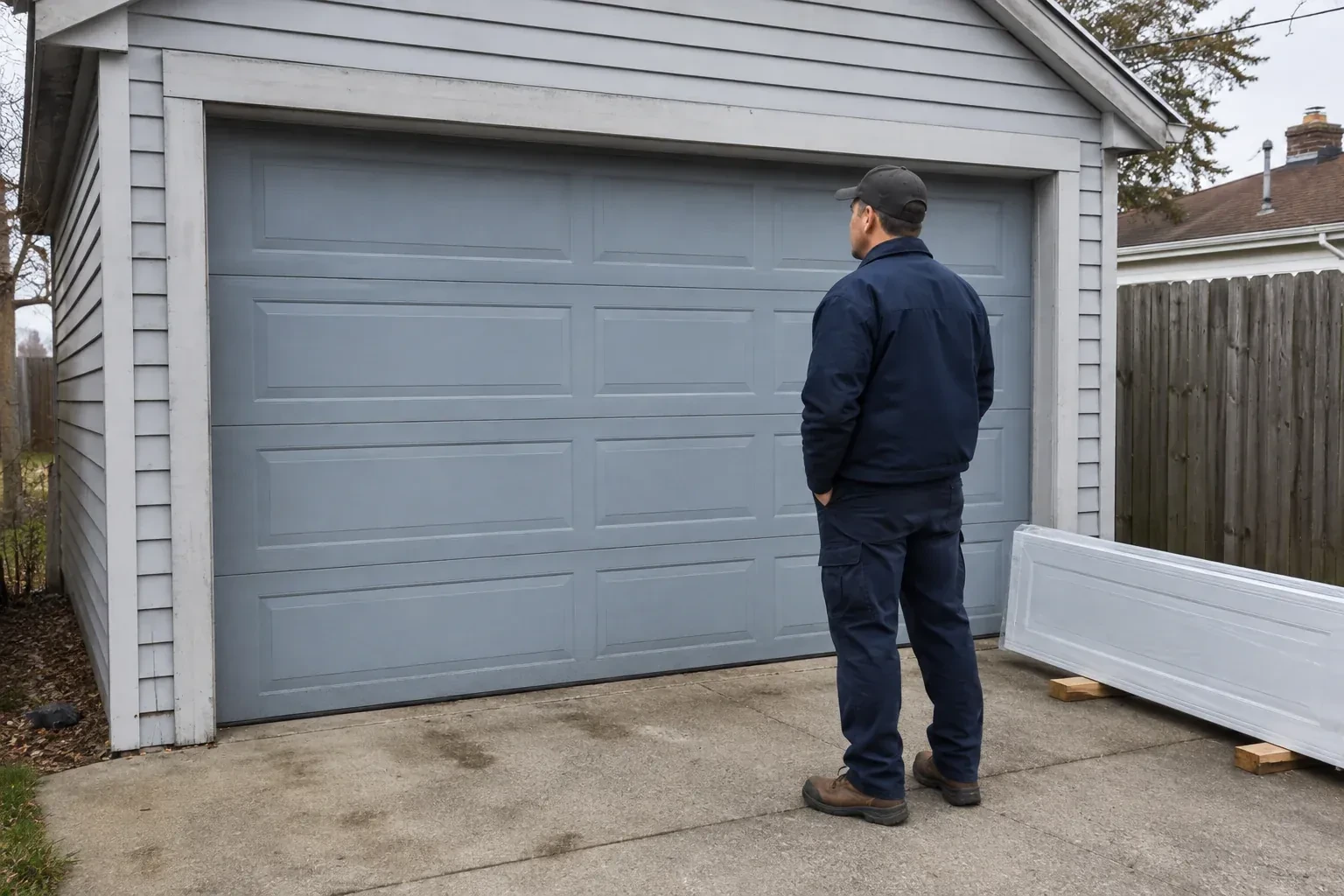
Installation & Upgrades
How is the old door removed?
Technicians disconnect the operator, stabilize the assembly and control the spring system before detaching cables or high-tension fixtures. Sections are supported and separated in sequence, followed by track and related hardware. The agreed scope states whether removed materials are taken away, while site protection keeps nearby finishes and belongings clear during dismantling. Sectional Garage Door Replacement
Why are new springs selected for the replacement door?
Counterbalance springs are chosen around the completed door's weight, height, track arrangement and intended travel. Insulation, steel skins, windows and reinforcement all contribute to that load. A spring combination from a different assembly may provide unsuitable torque even when it physically fits. Matching the counterbalance to the ordered door supports manageable manual movement and orderly cable travel. Insulated Steel Garage Door Installation
Do the tracks form part of the wind-rated system?
Yes. Tracks guide the rollers during daily travel and help retain the closed door when pressure acts across it. Gauge, shape, brackets, roller stems, fasteners, and attachment spacing may differ from a standard installation. That is why a wind-rated replacement is planned as a coordinated assembly instead of pairing reinforced sections with whichever tracks happen to be present. Wind-Rated Garage Door Replacement
Which opener safety checks are completed after installation?
The technician confirms that photo eyes are aligned and respond when their beam is interrupted during closing. Contact reversal is tested according to the opener instructions, and open and closed travel limits are reviewed. Wall controls, remotes and the manual release are also operated. These checks connect the automatic equipment to the new door's actual movement instead of carrying forward former settings. Carriage-House Garage Door Installation
Open 24/7
Request a visit
Ask for a quote
Call now · open 24/7(289) 275-8485- On-site assessment preferred
- Same fees day, night or weekend
- 31 years in business