Emergency Springs · Ajax
Garage Door Cable Replacement in Ajax
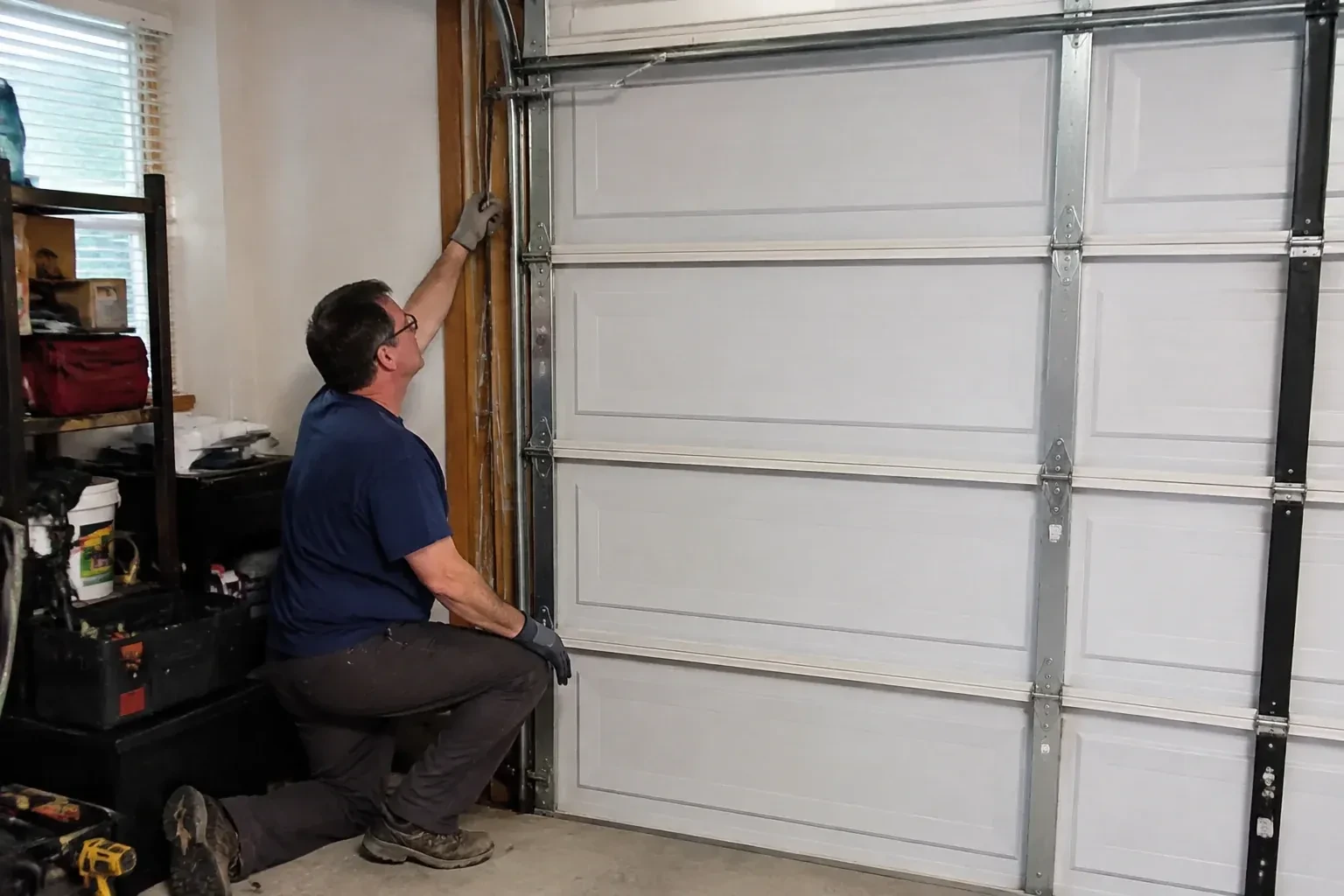
The cable has wrapped itself around the shaft above the door instead of sitting on its drum. When the opener runs, the door lurches, one side rises before the other, and the top panel twists.
Call now · open 24/7(289) 275-8485Right now
Before the door is looked at
Call (289) 275-8485, open 24/7.
Never run the opener on a door that is off its track or hanging crooked; every cycle drives the racked door harder into the rails and can pull the track from the wall or tear a hinge.
Pull the manual release only when the door is fully closed unless a technician asks otherwise; a door disconnected while partly open can move on its own if the springs are out of balance.
In plain words
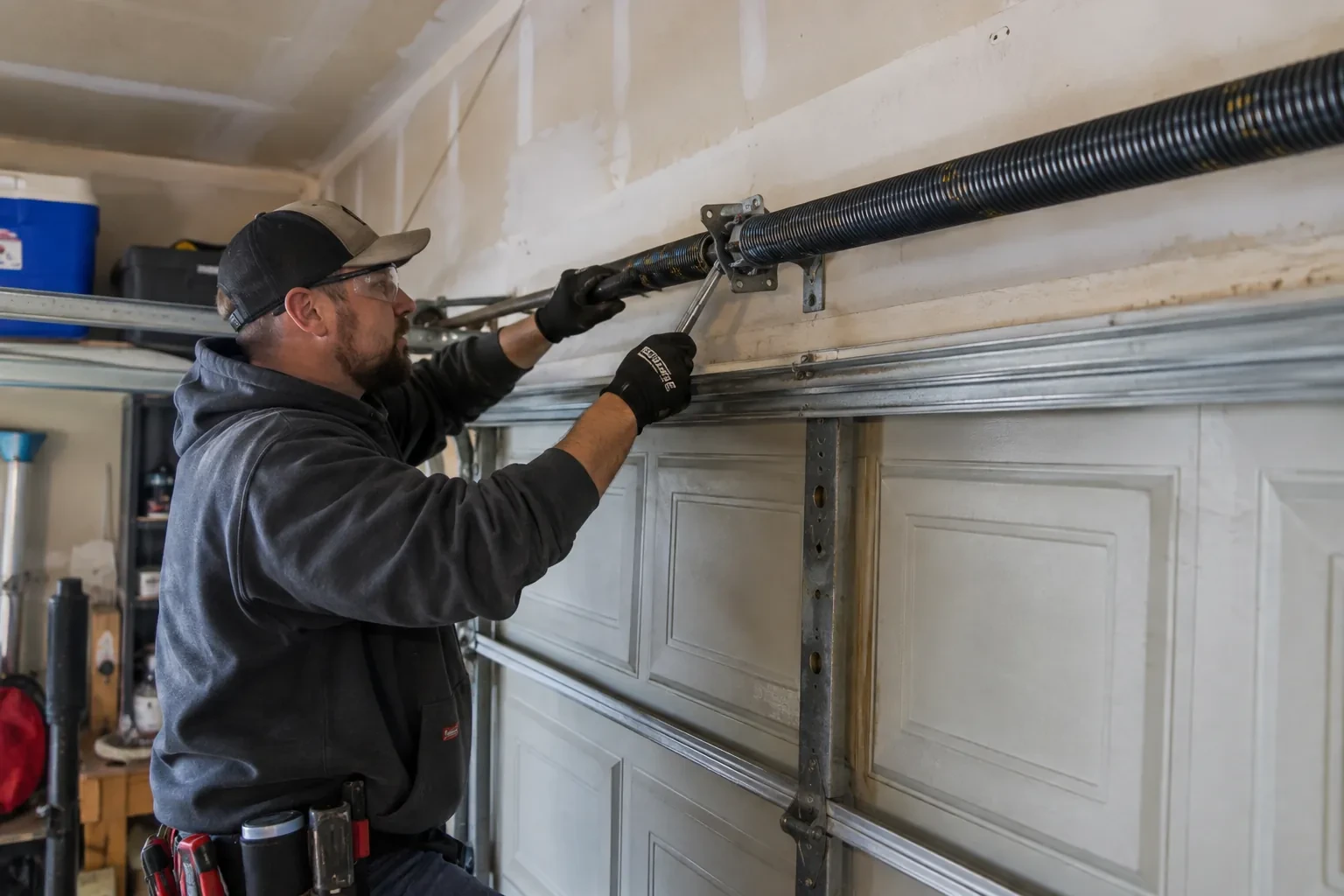
A cable visit runs in a set order. First the opener is disconnected and the door clamped so nothing can move. Then the counterbalance is unloaded so the drums, cables and bottom brackets can be handled calmly. The old cables come off, the drums and brackets are inspected, and new cables of the correct specification go on. Both sides are tensioned evenly until the door sits level, then the springs are wound back to the turns the door height calls for. Finally the door is balanced by hand, the opener reconnected and its travel and reversing checked. You are shown the finished door working before the technician leaves.
How the visit goesAfter years of slushy winters the cables look thinner near the bottom brackets, with rust streaks running down the door where they attach. The door still works, but the frayed wires catch your glove when you brush past.
Garage Door Cable Replacement · Ajax
How the visit goes
- 1
Why the last cable failed
A new cable fitted onto the same problem does not last, so the technician wants the cause. Frayed wires along the length point to rubbing against a bent track or a rough drum. Rust at the loop points to slush at the floor. A cable that jumped its drum usually follows the door closing on something, a spring that has lost tension, or a drum that slipped. A snapped cable on a door that was level beforehand often means age and corrosion rather than misalignment. You will be asked what happened before the failure, because a shovel in the opening or a bump from the car is a fact only you can supply.
- 2
Fitting cables that match the door
The replacement cables are chosen for construction, diameter and length rather than taken from a general bin. Residential doors use galvanized aircraft-type wire rope, and the length depends on the door height, the drum profile and the lift type; a high-lift door or a double door has its own requirements. The swaged stop on the new cable is seated in the drum slot and the cable is wrapped in the groove in the correct direction, leaving the drum on the side that leads straight down to the bracket. At the bottom, the loop goes over the bracket pin and is secured. The other side is fitted the same way.
- 3
Lubrication that helps, and where it does not belong
A few minutes with a can of garage-door lubricant twice a year keeps the whole system easy on the new cables. Spray the torsion spring lightly along its length, the hinge pins, the roller stems and bearings, and the bottom bracket pins, then run the door a few times to spread it. A light mist on the cables themselves slows rust; heavy grease is avoided because it holds grit and moisture. The tracks are left dry and simply wiped clean, since lubricant there collects dirt and lets rollers slide instead of roll. Silicone or a lithium spray made for doors is the right product.
In the van
- Extension-spring pulleys and sheave forks
- Silicone garage-door lubricant
- Winding bars
- Galvanized aircraft-type lift cables
- Bottom brackets with cable pin
What affects the quote
- 1
Oversized, commercial or high-lift doors
Doors taller or wider than a standard residential opening, or fitted with high-lift hardware, use heavier cables and drums and take longer to set up, which the quote reflects.
- 2
Impact damage to track or sections
A bumper strike often bends the track, a hinge or the bottom section as well as displacing the cable. Straightening or replacing those parts is quoted as separate work.
- 3
Access to the spring shaft
Shelving, storage or a low ceiling around the torsion shaft and drums slows the work. Clearing the area beforehand or a tighter working space both affect the time quoted.
Same fees day, night or weekend.
Garage Door Cable Replacement: questions
What is the cable drum, and when does it need replacing too?
The drum is the grooved wheel on each end of the torsion shaft that the cable winds onto as the door opens. Its grooves guide the cable in a single layer and its shape sets how the door is balanced through its travel. A drum is replaced when the grooves are worn or cracked, the cable slot is damaged, or it has spun on the shaft and scored it. Drums are changed in pairs.
Why should the bottom brackets never be loosened by hand?
The bottom bracket is where the cable attaches, so whenever the springs are wound it carries a share of the door's weight as tension. Loosening it while the counterbalance is loaded releases that tension all at once. Many manufacturers now fit tamper-resistant fasteners for this reason. The technician unloads the springs first, after which the bracket is just a piece of hardware to unbolt and replace.
What makes a cable fray?
Fraying is individual wires breaking, and it comes from two things: bending fatigue where the cable wraps the drum or pulley, and rubbing where it touches something it should not, such as a bent track edge, a rough drum groove, a seized pulley or a bracket sitting crooked after a bump. Corrosion speeds both. The technician looks for the rough edge so the new cable does not meet it.
Springs & Hardware
Bigger photo, sooner job: Emergency Book soon Plan ahead
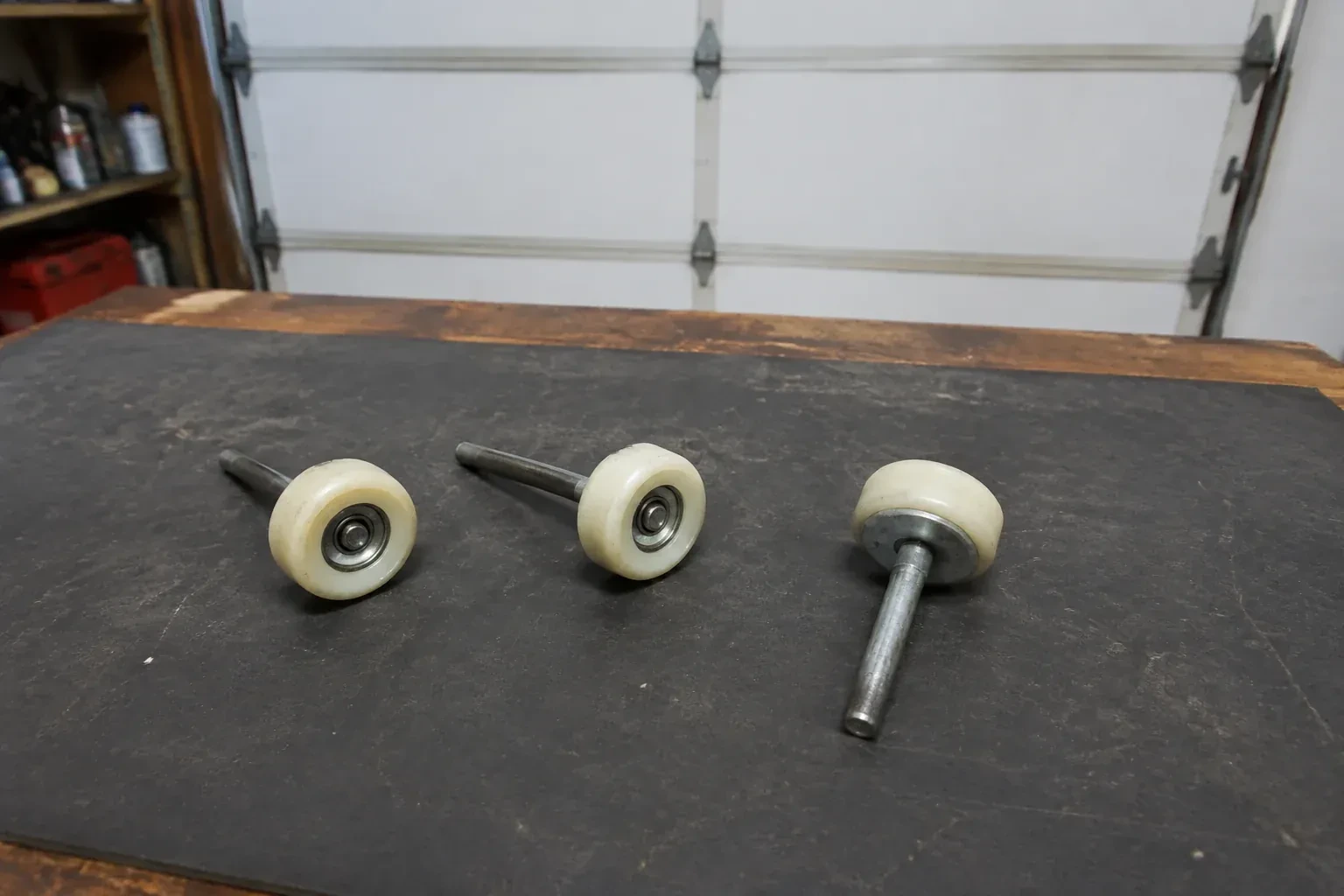 Book soonGarage Door Roller ReplacementA roller near the top corner is riding on the lip of the track rather than inside it, and the section above leans back a little…
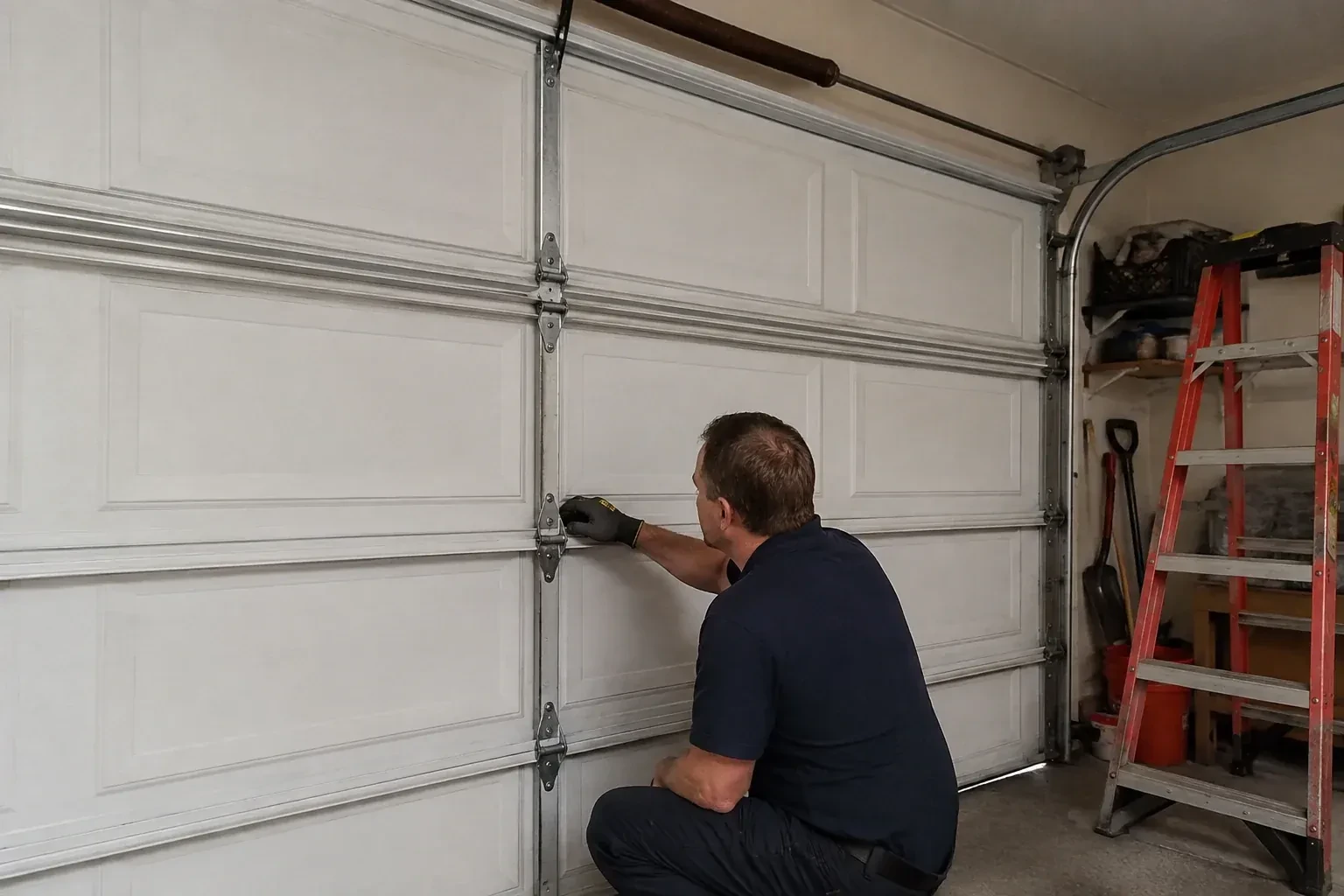 Book soonGarage Door Hinge ReplacementOn the old wood door, one hinge has pulled away from the panel, dragging a screw and a chunk of soft timber with it.
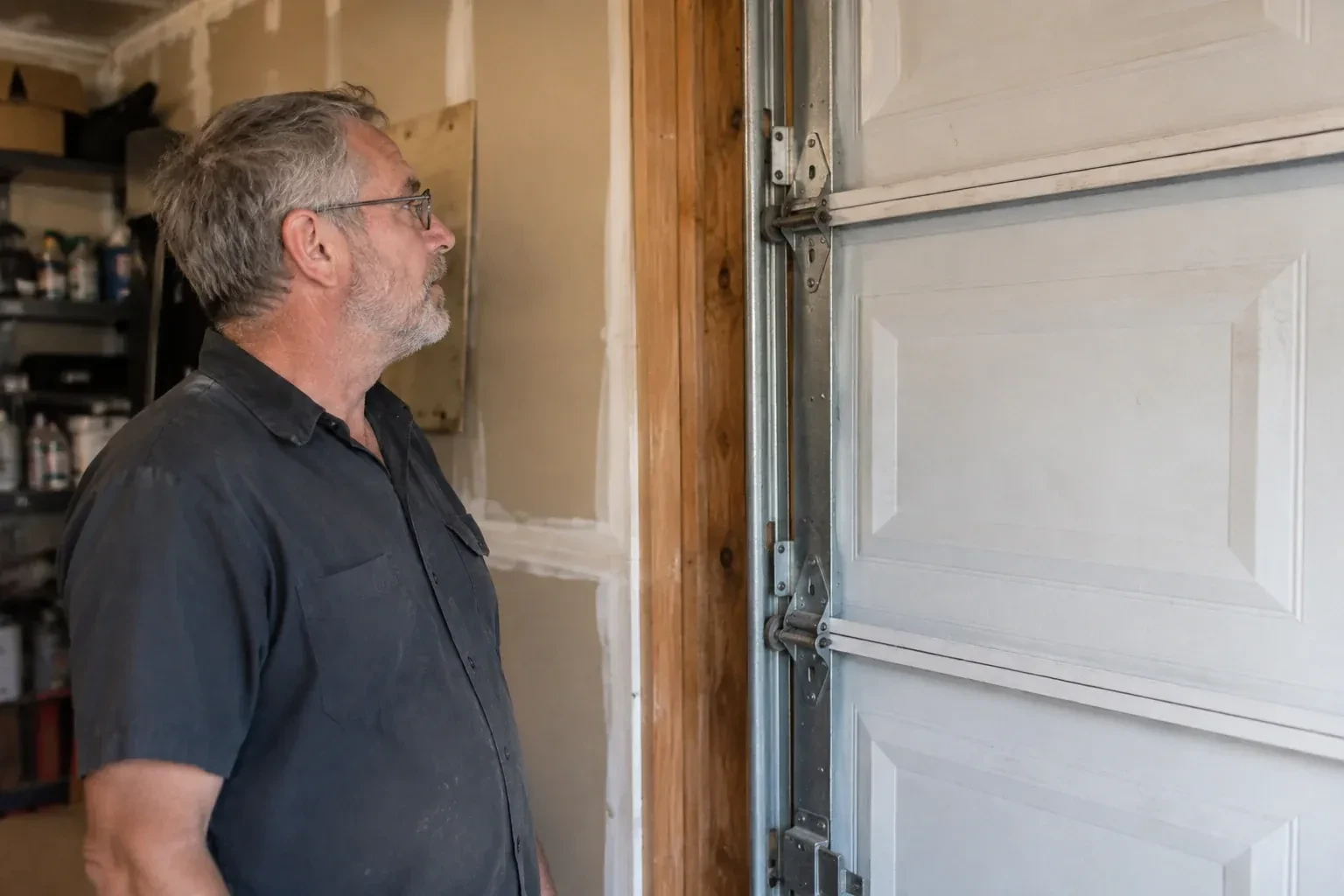 Book soonGarage Door Track Repair or ReplacementThe garage floor has settled at one corner, and the door now scrapes the concrete on that side while daylight shows at the other.
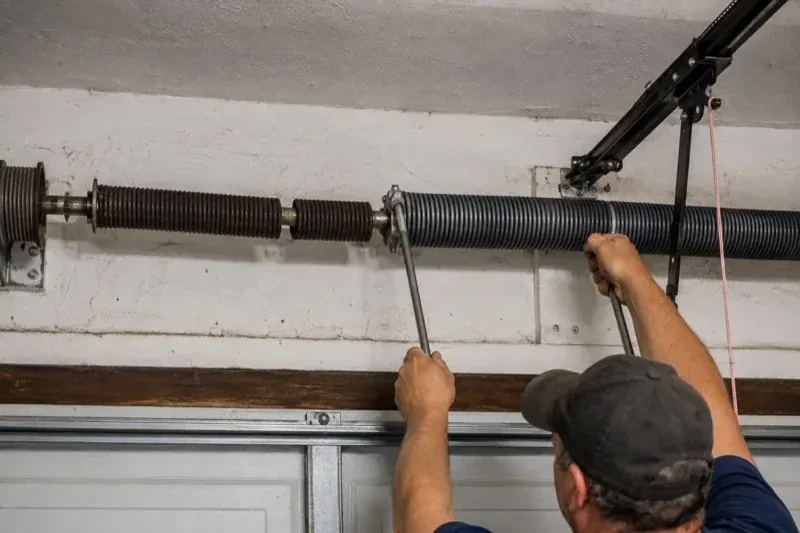 EmergencyTorsion Spring ReplacementAfter pulling the red release cord, you tried lifting the door yourself and it would barely leave the floor.
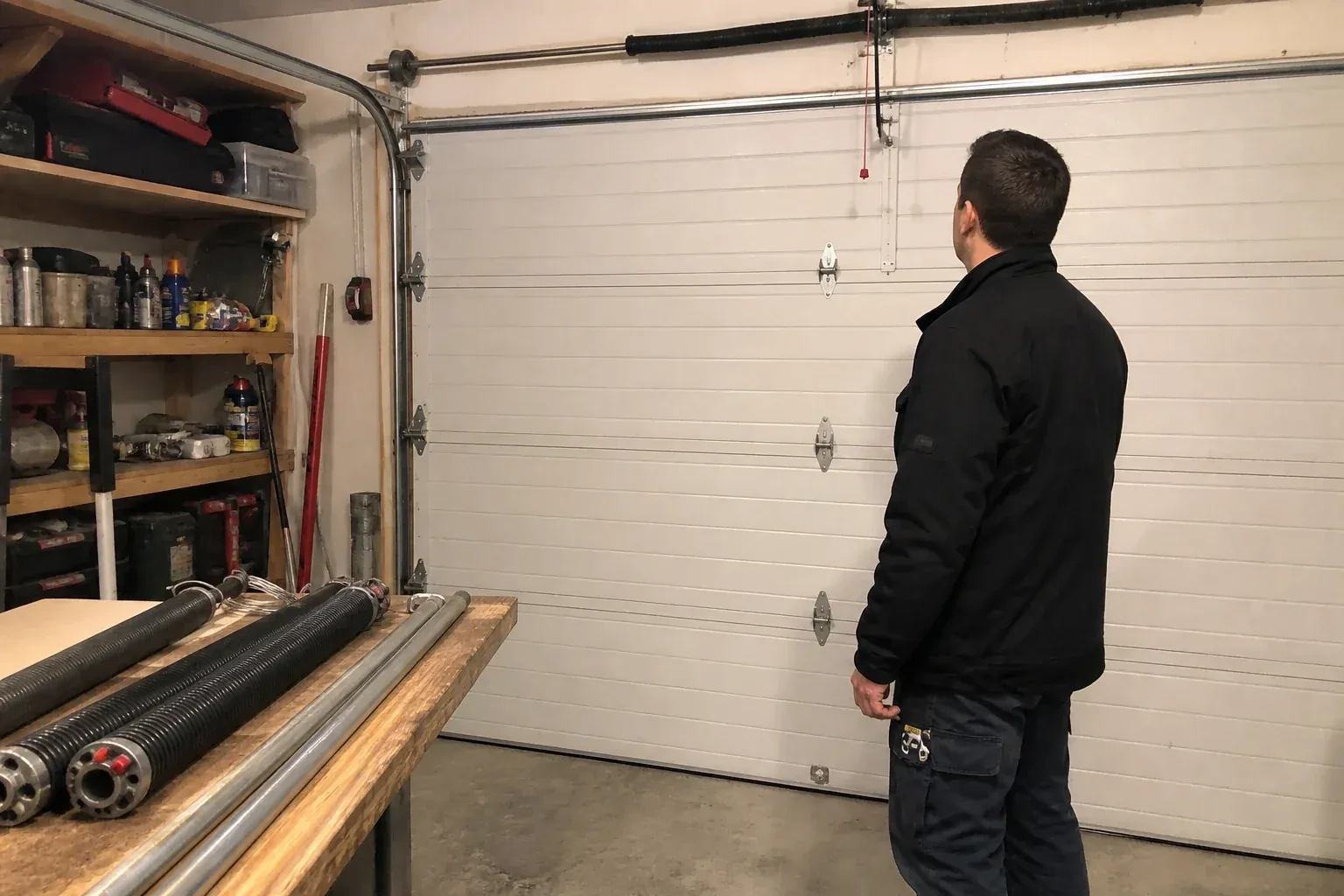 EmergencyExtension Spring ReplacementA bang like a dropped toolbox came from the garage last night.
Garage Door Cable Replacement near you
Durham, Ontario
Ajax information
- Town
- Ajax, Durham, Ontario
- In business
- 31 years
- Hours
- Open 24/7 · nights, weekends and holidays, same fees
- Phone
- (289) 275-8485
- Visits
- On-site assessment preferred. Request a visit or call.
What the census means at the door
23%
Newer homes. About 23% of homes in Ajax were built in 1980 or earlier, according to the 2021 Census.
A newer door still under its first set of springs is a good candidate for preventive work: lubricating the torsion spring, checking the cable ends at the drums and confirming balance before the spring reaches its cycle limit, so the replacement is planned rather than forced by a broken spring.
65%
Mostly houses. Single-detached houses make up about 65% of homes in Ajax (2021 Census).
Households in detached homes often have several remotes, a keypad and a phone app between family members and their cars. We keep all of them programmed to the opener, replace the ones that have failed, and explain how to add a new one when a car changes hands.
Nearby
Open 24/7
Request a visit
The cable has wrapped itself around the shaft above the door instead of sitting on its drum.
Call now · open 24/7(289) 275-8485- On-site assessment preferred
- Same fees day, night or weekend
- 31 years in business